Coffee Mucilage Removal Enzyme for Wet Mills
Enzymeforcoffee supplies coffee mucilage removal enzyme systems for wet mills that need controlled pectin breakdown after depulping. The goal is practical: reduce sticky mucilage load, improve washing efficiency, stabilize batch timing, and support consistent parchment flow into drying.
For processing managers, the value is not a label claim. It is a more predictable wet line: less variability from cherry condition, reduced hold-time uncertainty, cleaner wash release, and better control of fermentation-dependent process windows.
We supply wet mills, washing stations, exporters and the distributors who serve them with mucilage removal enzymes in wholesale and bulk volumes, and we support trials around your actual cherry, depulper output, water system, tanks, washing equipment and drying constraints.
Wholesale and bulk supply, quoted per order. For wet mills, coffee exporters and resellers. To get a quote, send the product or process step, the quantity you expect to use over the harvest, and the destination country. Request a quote
Where enzyme treatment fits in washed coffee processing
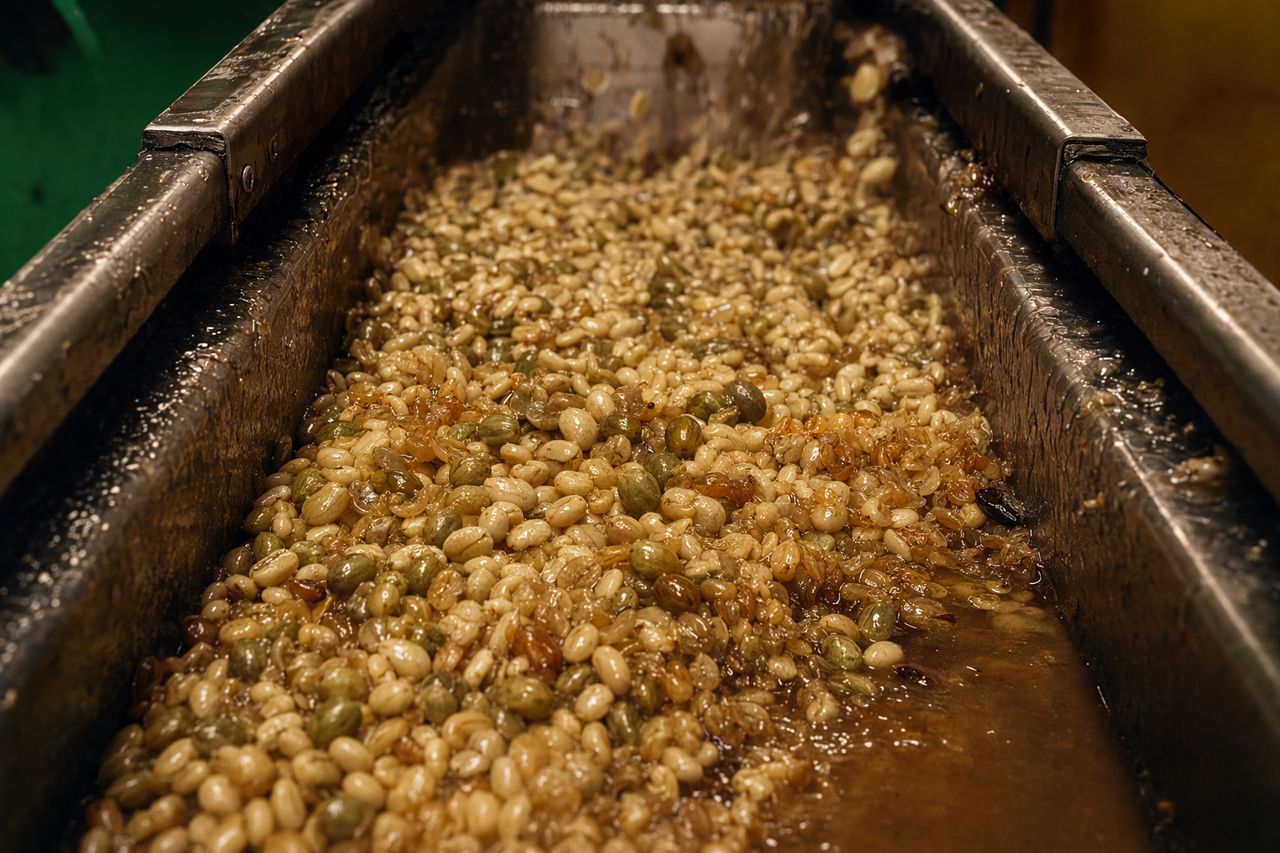
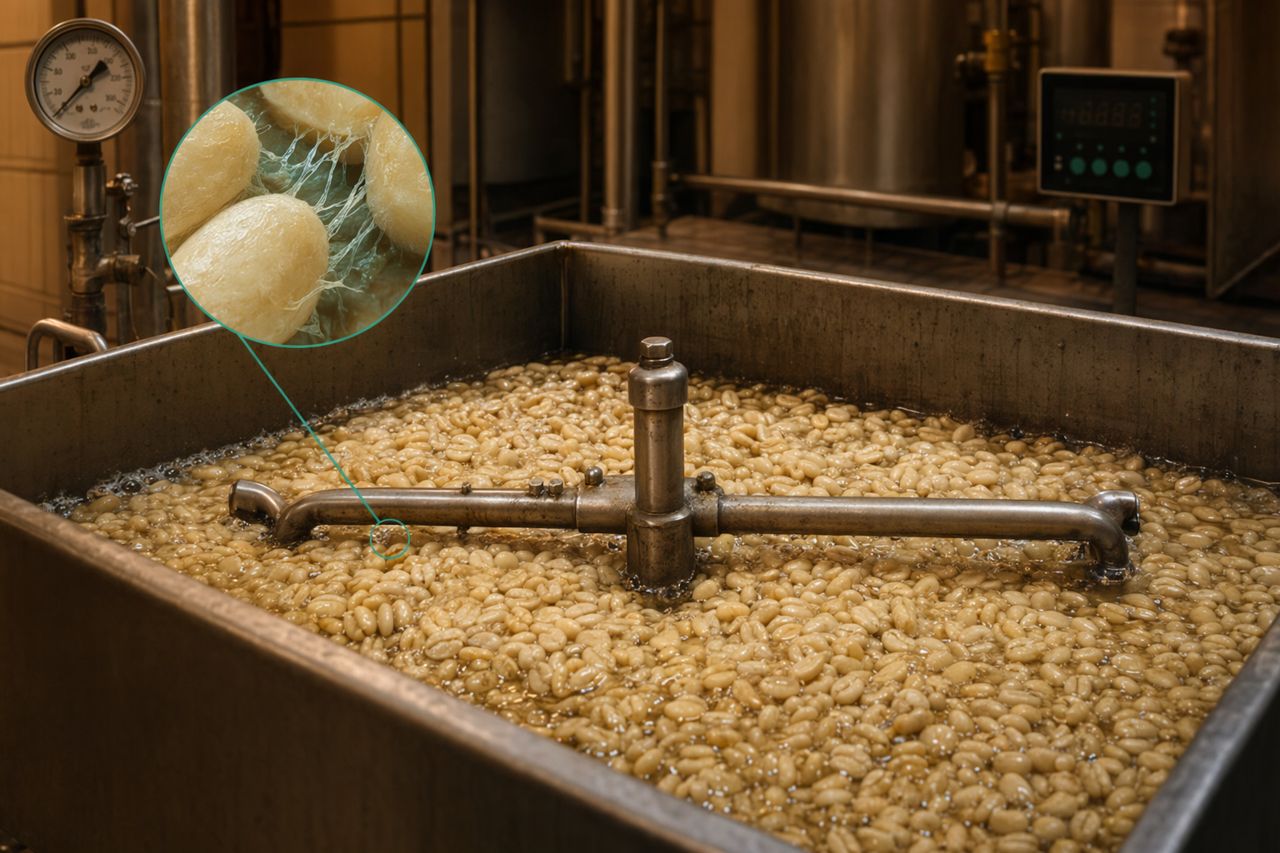
A mucilage removal enzyme is typically introduced after depulping, when parchment coffee still carries a pectin-rich mucilage layer. Treatment may be configured in soaking tanks, controlled holding vessels, or recirculated wet-processing stages before final washing and drying.
Typical process position
- Cherry receiving and sorting
- Depulping
- Enzyme-assisted mucilage breakdown
- Controlled soak or short fermentation window
- Washing and mucilage separation
- Draining and drying of parchment coffee
The enzyme does not replace plant discipline. It gives the wet mill a controlled biochemical tool for loosening mucilage so mechanical washing and water contact can work more consistently.
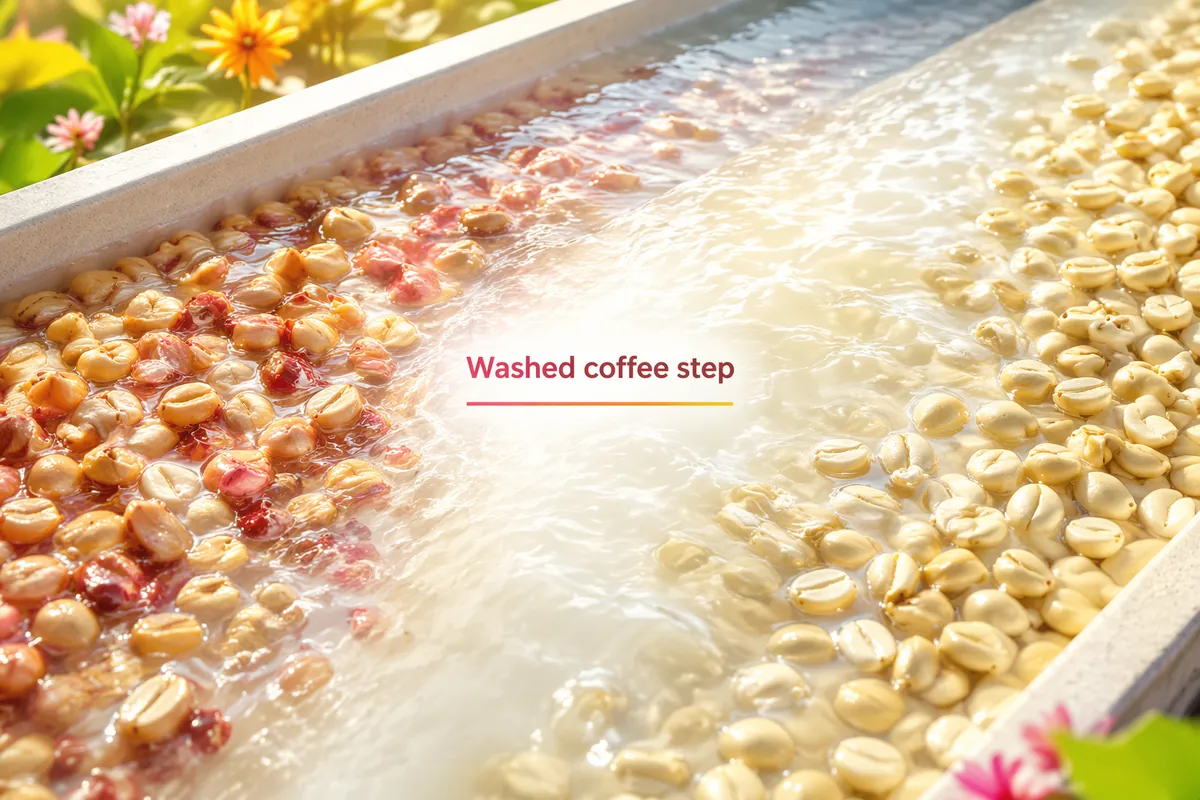
Faster mucilage removal is not automatically a better cup
The most common mistake mills make with a pectinase is to judge it on the clock alone. An enzyme can speed up demucilage, but faster removal does not guarantee better cup quality. If the fermentation is shortened, the fermentation step has to be redesigned and the whole result evaluated, including the flavour your buyer tastes.
The enzyme should be bought and trialled against two targets at once: wash release and schedule on one side, and the cup-quality checkpoint your buyers already use on the other.
The second trap is process conditions: they vary by origin and by the state of the incoming cherry, so a generic recipe copied from another mill or another season is a weak starting point. The practical approach is to monitor the real lot and set the treatment window from your own trial data.
What to ask a supplier before you buy
Mucilage removal enzymes are not one product. Before comparing quotes, ask each supplier these questions:
- What is the activity make-up? Ask which enzyme activities the preparation contains, for example polygalacturonase, pectate lyase or feruloyl esterase, rather than relying on one headline strength figure.
- Single pectinase or compounded blend? An enzyme preparation for green coffee processing can be a compounded blend rather than a single pectinase. Ask what is in the blend and what each part is meant to do.
- What pack size is available for a first trial? Ask which trial pack size the supplier can provide for this lot before you commit to harvest volumes.
- What documents come with the product? Ask for the documents your quality team and your export buyers need before the trial, not after.
- What support comes with the trial? A supplier should help you set up a treated-versus-untreated comparison, not only ship the product.
What the enzyme is designed to do
Coffee mucilage contains pectic material and other plant-derived polysaccharides that create stickiness, variable wash release, and batch-to-batch handling differences. A targeted mucilage removal enzyme helps break down these pectin structures under wet-mill conditions.
Process benefits wet mills can validate
- Faster and more consistent mucilage loosening after depulping
- Reduced dependence on uncontrolled natural fermentation timing
- Improved washing release and cleaner parchment handling
- Lower risk of sticky tank bottoms, clogged channels, and uneven transfer
- More predictable batch scheduling during peak cherry intake
- Better alignment between depulping capacity, wash capacity, and drying availability
- Support for consistent sensory quality by reducing process drift
Built for plant-floor control, not lab theory
Enzymeforcoffee focuses on operational fit. We look at temperature, pH range, water quality, cherry maturity, tank residence time, agitation, depulper performance, and downstream washing equipment. The same enzyme program must behave predictably during routine production, not only during a small benchtop trial.
Key operating variables
| Variable | Why it matters |
|---|---|
| Cherry maturity spread | Overripe and underripe lots release mucilage differently |
| Depulping quality | Excess pulp carryover changes solids load and washing demand |
| Tank geometry | Contact uniformity affects treatment consistency |
| Water ratio | Dilution and movement influence mucilage separation |
| Holding time | Enzyme-assisted breakdown must match the mill schedule |
| Wash equipment | Final release depends on mechanical separation as well as chemistry |
| Drying plan | Earlier or cleaner wash completion must align with patio, bed, or mechanical dryer capacity |
Commercial reasons to evaluate enzymatic mucilage removal
Wet mills often adopt enzyme assistance for one of three reasons: throughput pressure, consistency pressure, or water-management pressure.
Throughput pressure
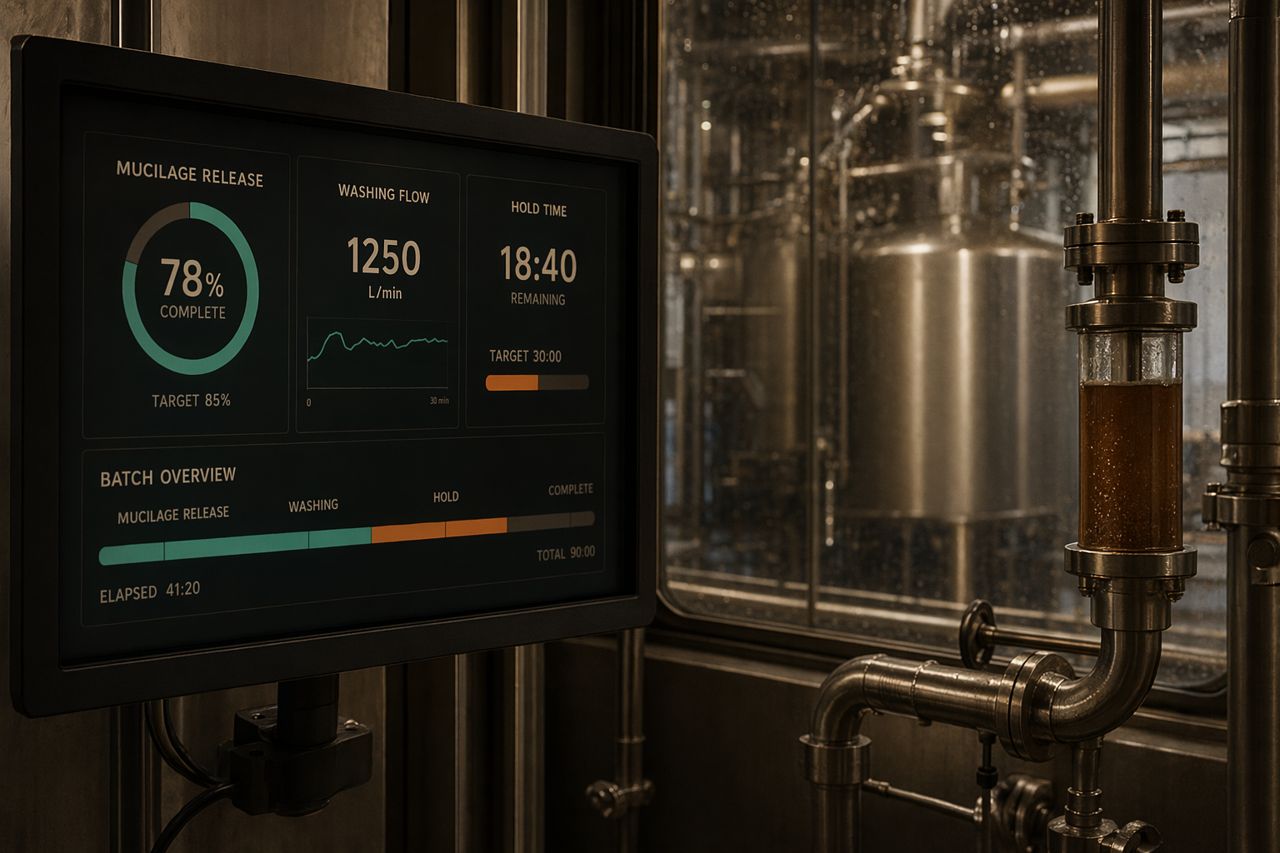
During peak harvest, depulped parchment can accumulate faster than tanks, washers, or drying areas can clear it. Enzyme-assisted mucilage breakdown can help shorten and stabilize the hold period, improving schedule control without relying only on extended fermentation.
Consistency pressure
Traditional fermentation is sensitive to temperature, cherry condition, microbial load, and operator timing. Enzyme support gives the plant a controlled input that helps reduce batch variability and supports repeatable wash endpoints.
Water-management pressure
When mucilage releases more cleanly, washing can become more efficient. The specific impact depends on equipment and operating practice, but many mills evaluate enzyme use to reduce rewash cycles, sticky discharge, and solids handling issues.
Application support from Enzymeforcoffee
We help wet mills move from interest to production validation with a structured approach:
- Review of current washed-process flow and bottlenecks
- Selection of an enzyme format suited to your wet mill conditions
- Trial plan for treated and untreated comparison batches
- Practical observation points for mucilage release, wash clarity, parchment feel, and batch timing
- Scale-up support for tank addition, mixing, and operator procedures
- Documentation support for internal approval and supplier qualification
We do not ask your team to redesign the mill around the enzyme. We help define where the enzyme fits into the line you already operate.
What to expect during a plant trial
A well-run trial should compare treated and untreated lots using the same cherry class, depulper settings, tank conditions, and washing procedure. The evaluation should focus on measurable plant outcomes rather than isolated lab numbers.
Useful trial observations
- Time to visible mucilage loosening
- Ease of parchment washing
- Stickiness at tank discharge
- Water clarity trend during washing
- Operator assessment of parchment feel
- Transfer behavior through channels, pumps, or conveyors
- Final parchment uniformity before drying
- The cup-quality checkpoint required by your quality team or your buyers, run on treated and untreated lots side by side
Designed for wet mills, exporters, and integrated coffee processors
This application is relevant for:
- Washed Arabica wet mills
- Centralized coffee processing plants
- Estate mills with peak-season tank pressure
- Exporter-operated washing stations
- Specialty and commercial processors seeking better batch control
- Plants upgrading from uncontrolled fermentation to tighter process management
Request a quote
A quote is prepared per order. To get one quickly, send:
- Your processing volume or the quantity of enzyme you expect to need for a trial and for the harvest
- Your country or region and the destination for delivery
- Your current washed-process flow and the main bottleneck
- Whether you are a mill, an exporter, or a reseller supplying mills
- Your target: faster mucilage release, cleaner washing, more consistent batches, or reduced downtime
Use the inquiry form and Enzymeforcoffee will respond with a fit-for-purpose recommendation and a quote for your wet mill.