Designing a Pilot Run in a Coffee Mill Without Disrupting Commercial Production
A coffee mill pilot run should create usable scale-up evidence without turning the commercial line into a test bench. The goal is not simply to see whether an enzyme solution works. The goal is to understand whether it improves the operating constraint that matters: extraction yield, viscosity, filtration, separation stability, batch consistency, or downtime.
For a processing manager, the best pilot is narrow, scheduled, observable, and easy for operators to execute. Enzymeforcoffee supports that structure as an enzyme supplier for coffee processing with formulation guidance, plant-trial planning, and documentation support for production teams.
Start with one operating objective
A pilot run becomes difficult when it tries to answer every question at once. Before any trial batch is scheduled, define the primary process target.
Common coffee processing objectives include:
- Reducing extract viscosity before concentration or filtration
- Improving liquid-solid separation after extraction
- Supporting higher soluble recovery from coffee solids
- Stabilizing batch-to-batch flow behavior
- Reducing filter change frequency or clean-down pressure
- Improving handling of parchment, mucilage, or fibrous fractions in wet-side operations
- Shortening bottleneck stages without stressing pumps or separators
A clear objective determines the trial design. A viscosity-reduction trial needs different observations than a yield-support trial. A filterability trial needs sampling around the filtration step, not only at the tank outlet.
Protect commercial production first
The safest pilot design works inside an existing production rhythm. Do not build a trial that requires unusual operator behavior, extended line holds, or unplanned equipment changes unless the business case justifies it.
Choose a low-risk production window
Select a window where the plant can absorb controlled observation without compromising customer orders. Good candidates are:
- A scheduled campaign with stable raw material supply
- A shift with experienced operators
- A production day without planned maintenance conflicts
- A batch size that is large enough to represent plant behavior but not so large that recovery options are limited
- A line configuration already familiar to the team
Avoid first-shift restarts after long shutdowns, raw material transitions, and periods when utilities or filtration assets are already under pressure.
Keep the trial visible to operators
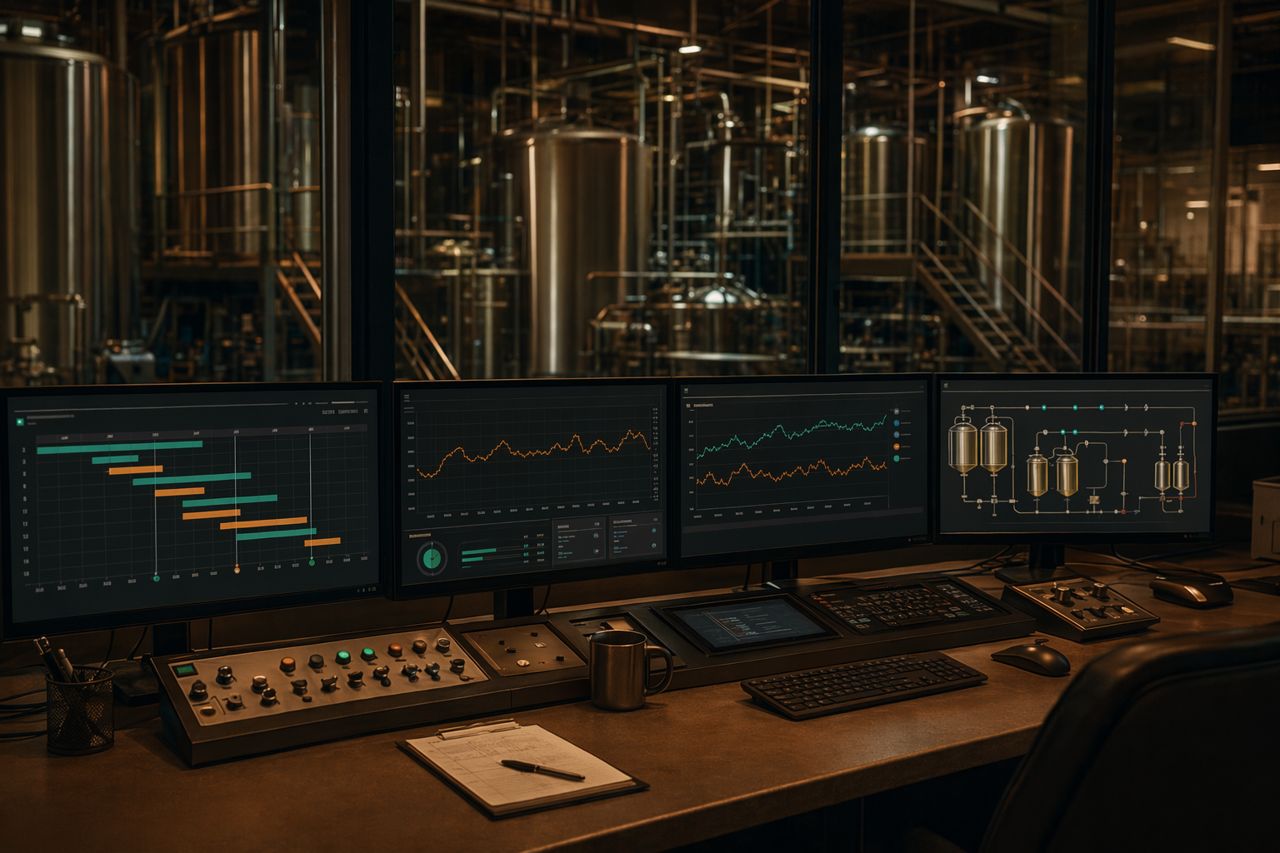
The operator panel should show what matters during the run. If the trial depends on a condition that is not visible, not recorded, or hard to control, it will be difficult to validate.
Before the run, confirm how the team will observe:
- Feed tank condition
- Temperature trend
- Mixing behavior
- Pump loading
- Pressure across filtration or separation steps
- Flow stability
- Hold time
- Clarified extract appearance
- Cleaning demand after the batch
These are practical indicators. They help convert the trial from a lab idea into a plant decision.
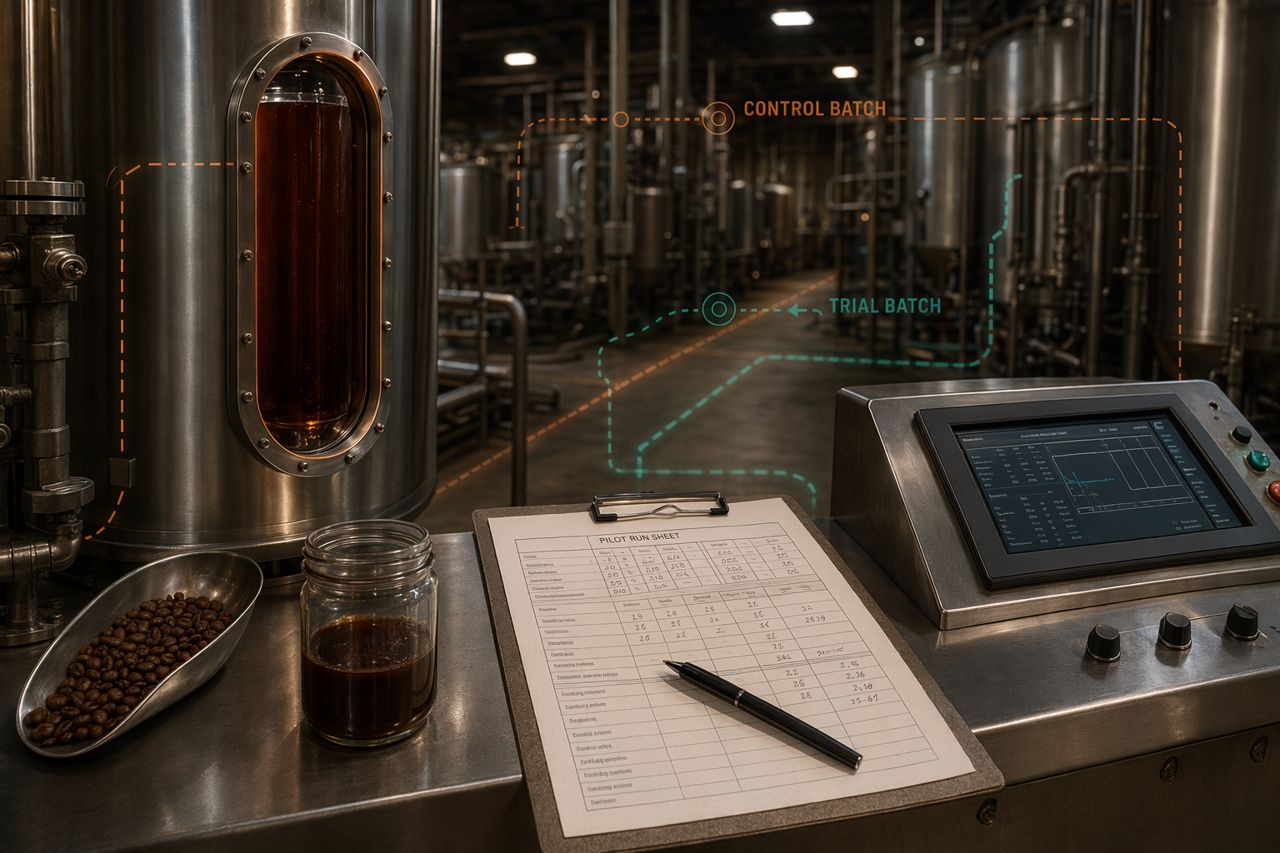
Build a control batch into the plan
A pilot run needs a fair comparison. The control batch should be as close as possible to the trial batch in raw coffee input, grind or particle profile where relevant, extraction conditions, batch size, equipment path, and operator routine.
The control does not need to be perfect. It does need to be documented. If raw material, temperature, residence time, or separation conditions differ, those differences should be recorded so the result is not misread.
Practical control rules
Use these rules when planning the comparison:
- Run the control close in time to the trial batch
- Keep the same equipment path where possible
- Avoid changing filtration media between comparison points unless required
- Record any shift handover notes that could affect interpretation
- Capture baseline pressure, flow, and visual clarity observations
- Note any cleaning, flushing, or hold events before the trial batch
A strong control batch reduces internal debate after the pilot. It gives operations, quality, and commercial stakeholders a common reference point.
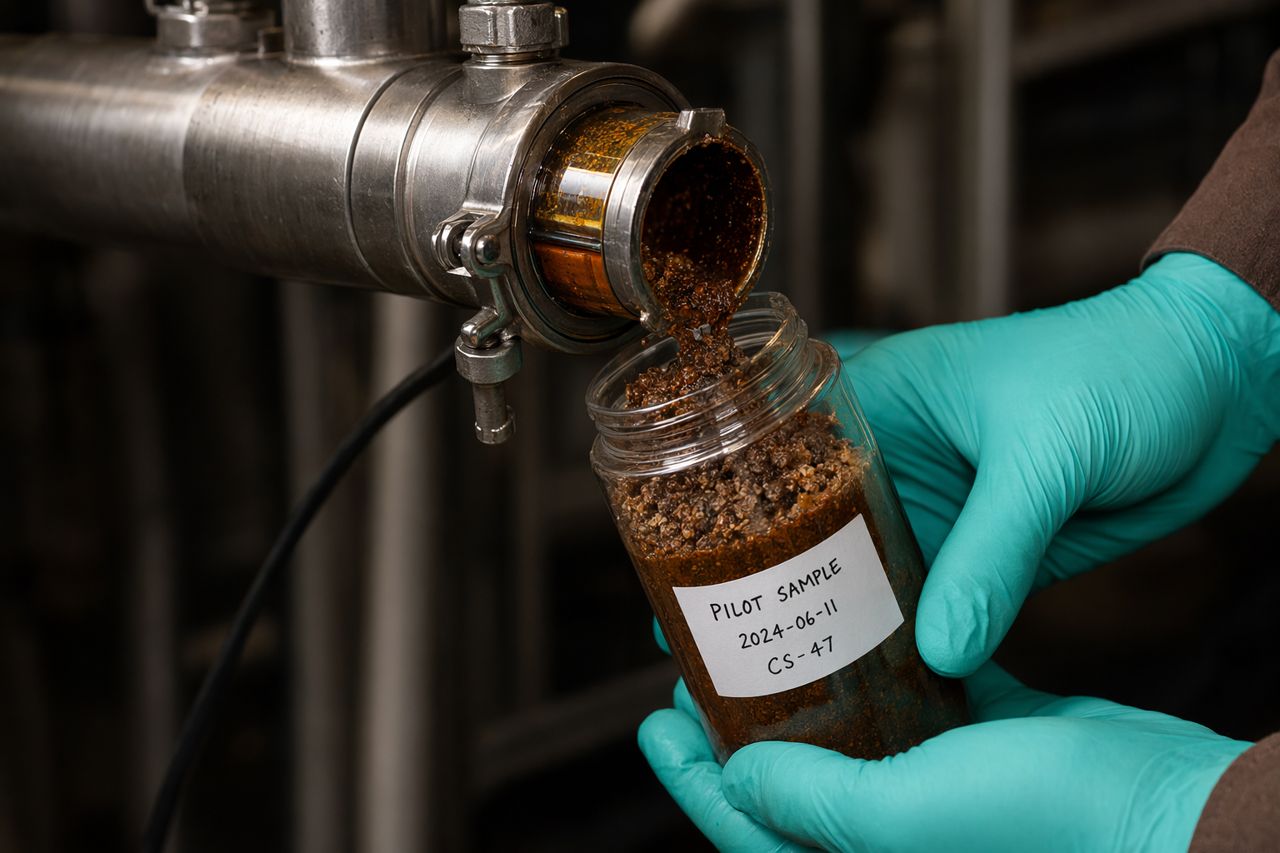
Select sampling points before the batch starts
Sampling points should match the process question. If the objective is extraction support, collect samples before and after the extraction stage. If the objective is filterability, collect around the filter feed and filtrate. If the objective is viscosity reduction, collect before enzyme contact, after contact, and before the downstream bottleneck.
Suggested sampling map
For many coffee processing plants, a practical pilot map includes:
- Raw slurry or feed material before enzyme addition
- Early contact point after mixing is confirmed
- End of target contact window
- Pre-separation or pre-filtration feed
- Clarified or separated liquid stream
- Downstream holding tank or concentration feed
- Final process point relevant to the business objective
Sampling should not create a safety risk or slow the line. Choose ports operators already use, and label samples in a way that matches the batch record.
Write operator notes that management can use
A pilot batch often fails to create a decision because the notes are too vague. The phrase ran fine is not enough. The commercial team needs practical evidence tied to throughput, consistency, downtime, and product handling.
Useful operator note fields
Include short fields for:
- Batch start and end time
- Addition point and mixing confirmation
- Tank appearance before and after contact
- Pump sound or load changes
- Pressure trend at filtration or separation
- Flow interruptions or surging
- Filter change events
- Sediment, fines, or foam observations
- Cleaning time or rinse behavior
- Any deviation from the planned sequence
The notes should be easy to complete during the shift. If the form is too complex, the data will be incomplete.
Control what can realistically change
A pilot run does not need excessive complexity. It needs disciplined control over the variables that could distort the conclusion.
Keep these factors consistent where possible:
- Coffee input type and preparation
- Solids loading or feed concentration
- Temperature profile
- Mixing intensity
- Contact time
- pH condition where controlled by the plant
- Transfer sequence
- Filtration or separation setup
- Downstream hold time
If a variable cannot be held constant, document it. In production environments, transparency is more useful than pretending every condition is identical.
Define success before the trial
The best time to define success is before the first trial batch. Otherwise, the team may debate the result based on different priorities.
A coffee mill pilot can be considered successful if it delivers one or more of the following:
- More stable flow into filtration or separation
- Lower visible resistance across a bottleneck step
- Cleaner separation behavior
- Improved extract handling before concentration
- Higher recovered soluble fraction under comparable conditions
- Reduced operator intervention
- Lower cleaning burden after the batch
- Repeatable performance across more than one run
Success does not always mean immediate plant-wide adoption. Sometimes the right outcome is a second pilot with a tighter comparison, adjusted addition point, or better sampling discipline.
Schedule the pilot like a production event
A pilot run should have the same seriousness as a customer order. Assign ownership before the batch starts.
Pre-run alignment checklist
Confirm the following:
- Production manager approval
- Quality team awareness
- Operator briefing completed
- Enzyme solution received, identified, and staged
- Addition point confirmed
- Sampling containers prepared
- Batch record modified or pilot sheet attached
- Control batch identified
- Hold and diversion plan agreed
- Post-run review meeting scheduled
This preparation reduces downtime risk. It also helps ensure the trial does not depend on one person remembering details during a busy shift.
Decide what happens after the run
A pilot without a review plan becomes a collection of samples and opinions. Schedule a review while the batch is still fresh in operator memory.
The review should answer:
- Did the trial protect commercial production?
- Were the target process conditions achieved?
- Did the enzyme solution change the operating constraint?
- Were there any handling, cleaning, or quality concerns?
- Is the result strong enough for a repeat trial or scale-up?
- What information is still missing?
For many plants, the next step is not a full rollout. It is a controlled repeat under a different raw material lot, another shift, or a more demanding production window.
How Enzymeforcoffee supports pilot design
Enzymeforcoffee works with coffee processing teams that need enzyme trials to fit real plant conditions. Our support focuses on practical execution, not abstract claims.
We can help with:
- Matching enzyme solution selection to the process objective
- Identifying addition points and contact windows
- Structuring control and trial comparisons
- Building operator note templates
- Defining sampling points for plant validation
- Interpreting results against throughput, viscosity, filtration, and yield goals
- Preparing the next step toward repeat trials or production scale-up
The commercial value of a pilot run comes from clean evidence. A well-designed trial lets management see whether the enzyme solution can improve the bottleneck without adding operational risk.
Request pilot-run support
If your plant is planning a trial around extraction yield, viscosity reduction, filtration, or coffee extract consistency, Enzymeforcoffee can help define a practical pilot structure.
Request a quote through the on-site form and include your process objective, current bottleneck, production format, and intended trial window.